
A practical guide to resume formatting in 2026—how recruitment agencies handle CV preparation today, the pros and cons of each method, and why automated resume formatting is becoming the standard.
Recruitment agencies move fast.
Candidates are sourced quickly.
Clients expect rapid submissions.
Competition is intense.
Yet one task continues to quietly slow teams down right before submission:
Resume formatting.
Fixing layouts, cleaning spacing, standardising sections, anonymising details, and preparing CVs for clients may seem minor—but across dozens or hundreds of candidates, it becomes a serious operational bottleneck.
In this article, we’ll explore resume formatting in the recruitment market:
all the common methods agencies use today, the trade-offs of each, and why automated resume formatting is becoming the preferred approach in 2026.
Why Resume Formatting Still Matters in Recruitment
Recruitment is a people business—but resumes remain the most visible output of that work.
Clients review CVs side by side.
Hiring managers scan quickly.
First impressions form in seconds.

When resumes arrive with inconsistent formatting, broken layouts, or unclear structure, the agency—not the candidate—takes the hit.
Resume formatting directly affects:
- submission speed
- perceived professionalism
- internal efficiency
That’s why every recruitment agency, whether consciously or not, has a resume formatting strategy.
Resume Formatting Method 1: No Formatting (Only Anonymisation)
Some agencies choose to avoid formatting altogether.
Instead, they:
- remove candidate name and contact details
- submit the resume largely “as-is”
Why agencies do this
- minimal effort
- avoids layout issues caused by reformatting
- faster for low-touch submissions
Limitations
- inconsistent CV quality
- poor client experience
- resumes often hard to scan
- agency brand is invisible
This approach may work in high-volume, low-margin environments—but it rarely supports premium positioning or long-term client trust.
Resume Formatting Method 2: Recruiters Format CVs Manually
A very common approach is manual resume formatting by recruiters themselves.
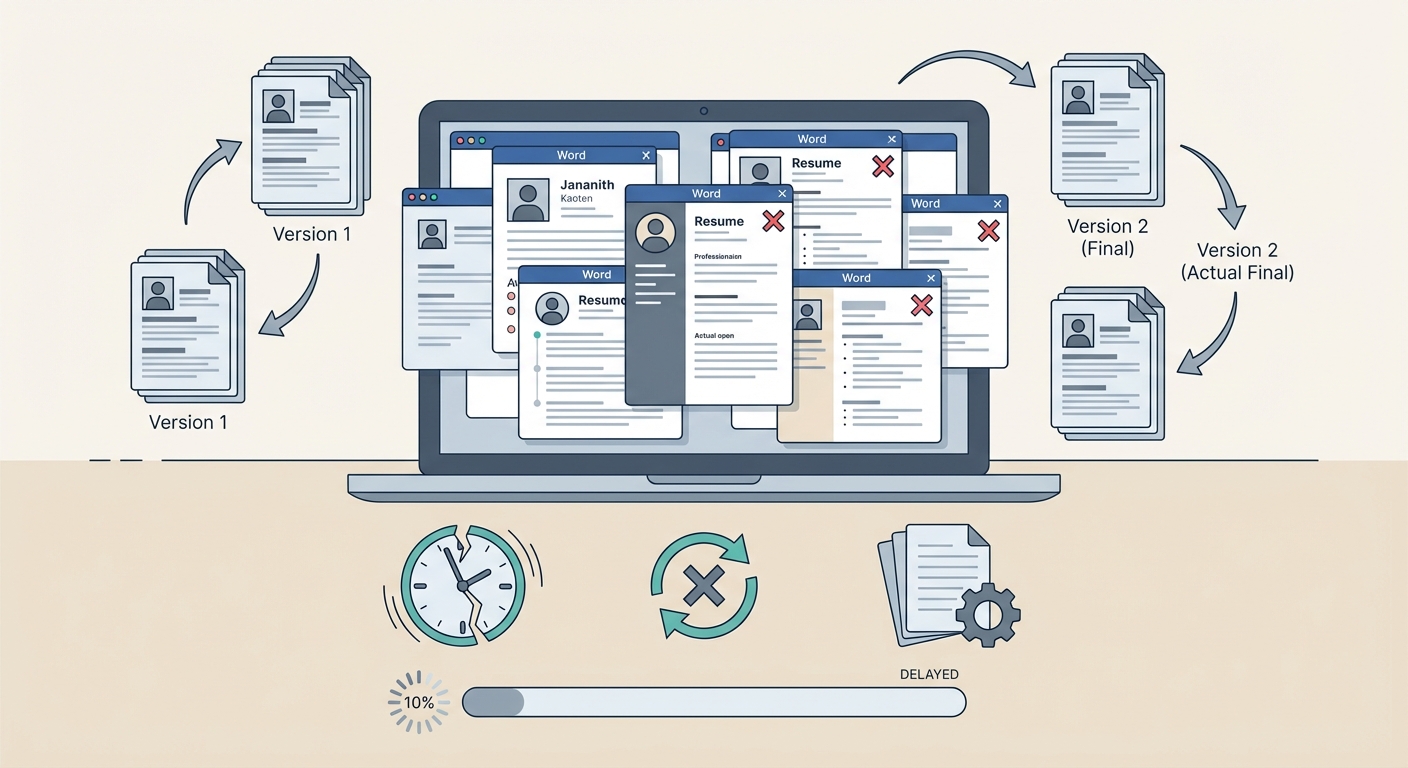
Recruiters:
- download the resume
- paste content into a Word template
- fix spacing, headings, and dates
- export and re-upload
Why agencies use this
- no additional tools required
- full control over content
- flexible for edge cases
Limitations
- highly time-consuming
- inconsistent quality across recruiters
- formatting breaks under pressure
- recruiters spend time on admin instead of placements
At scale, manual formatting becomes one of the biggest hidden drains on recruiter productivity.
Resume Formatting Method 3: Internal Admin or Operations Teams
Some agencies centralise resume formatting with internal admin or operations teams.
Recruiters send resumes to ops, who:
- format CVs into approved templates
- anonymise when required
- return formatted versions for submission
Why agencies use this
- more consistent output
- recruiters stay focused on candidates
- better quality control
Limitations
- creates internal queues
- delays during peak periods
- back-and-forth revisions
- ops teams become bottlenecks
This model improves consistency but struggles when submission speed is critical.
Resume Formatting Method 4: Outsourced Resume Formatting
Another approach is outsourcing resume formatting to external vendors.
Agencies send resumes to a third party who formats them overnight or within set SLAs.
Why agencies use this
- reduced internal workload
- predictable formatting quality
- cost-effective in some regions
Limitations
- turnaround delays
- less control over final output
- data security concerns
- not suited for same-day submissions
In fast-moving recruitment markets, waiting hours—or days—for formatted CVs is often not viable.
Resume Formatting Method 5: Automated Resume Formatting Technology
In 2026, more agencies are shifting to automated resume formatting tools.
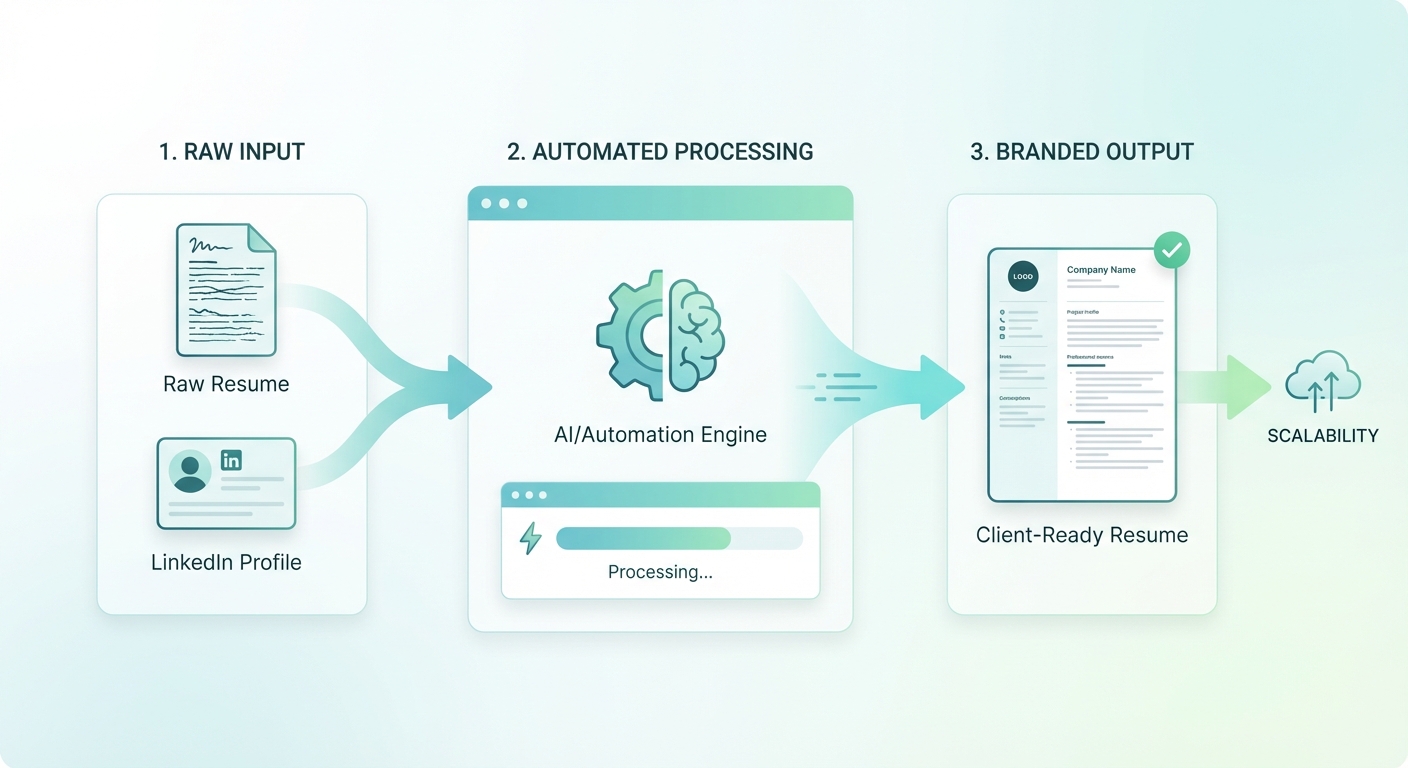
These platforms:
- convert raw resumes or LinkedIn profiles automatically
- apply agency-approved templates
- standardise structure, layout, and spacing
- support anonymisation and reuse
Why agencies adopt automation
- instant formatting
- consistent output across teams
- no manual admin work
- scales with volume
This approach combines speed, quality, and control—without adding headcount.
Why Resume Formatting Is an Operational Problem
Across all methods, one pattern is clear:
Resume formatting is not a design task.
It is an operational problem.
When formatting is inefficient:
- submissions slow down
- recruiters burn time on admin
- clients receive inconsistent CVs
The more candidates an agency handles, the more these inefficiencies compound.
How Modern Agencies Standardise Resume Formatting
High-performing agencies treat resume formatting as a system, not a task.
They typically:
- Define approved CV templates
- Centralise formatting rules
- Automate wherever possible
This removes formatting decisions from individuals and embeds quality directly into the workflow.
The Role of CVFormatter in Modern Resume Formatting
This is where tools like CVFormatter fit naturally.
CVFormatter is built specifically for recruitment agencies to handle resume formatting at scale.
It allows teams to:
- convert raw resumes or LinkedIn profiles into client-ready CVs
- apply branded templates automatically
- anonymise when required
- reuse formatted CVs across multiple submissions
Recruiters format once and move on—without manual cleanup.
Book a free demo here.
Resume Formatting Without Slowing Recruiters Down
A common fear is that “better formatting means more steps.”
In practice, automation does the opposite.
With the right system:
- recruiters spend less time on documents
- submissions move faster
- formatting quality becomes predictable
Resume formatting becomes invisible—embedded directly into the recruitment workflow.
Resume Formatting and ATS Compatibility
No matter the method, formatted resumes must still work inside ATS environments.
That means:
- clean document structure
- predictable section hierarchy
- no formatting that breaks parsing
Automated tools like CVFormatter are designed to preserve ATS compatibility while delivering consistent formatting.
Measuring the ROI of Resume Formatting
Agencies often underestimate how much resume formatting costs them.
The ROI shows up as:
- faster time-to-submit
- fewer internal revisions
- reduced admin workload
- improved client perception
Even saving a few minutes per CV quickly translates into hours reclaimed every week.
Resume Formatting as a Competitive Advantage
In crowded recruitment markets, small operational advantages compound.
Agencies that deliver consistently formatted, professional CVs:
- stand out visually
- feel more organised
- inspire greater confidence
Resume formatting may not win a placement on its own—but poor formatting can easily lose one.

Final Thoughts
Resume formatting has many forms in the recruitment market—from doing nothing, to manual edits, to outsourcing, to automation.
Each method has trade-offs.
In 2026, agencies that treat resume formatting as a scalable system, rather than a manual task, gain speed, consistency, and control.
If your team is still formatting resumes by hand, it may be time to rethink how resume formatting fits into your recruitment operations.
Not all resume formatting tools are built the same way — they differ significantly on pricing models, team collaboration costs, ATS integrations, and AI capabilities. See how CVFormatter compares to the leading alternatives.
Book a free demo to see how CVFormatter helps recruitment teams standardise resume formatting—without slowing recruiters down.