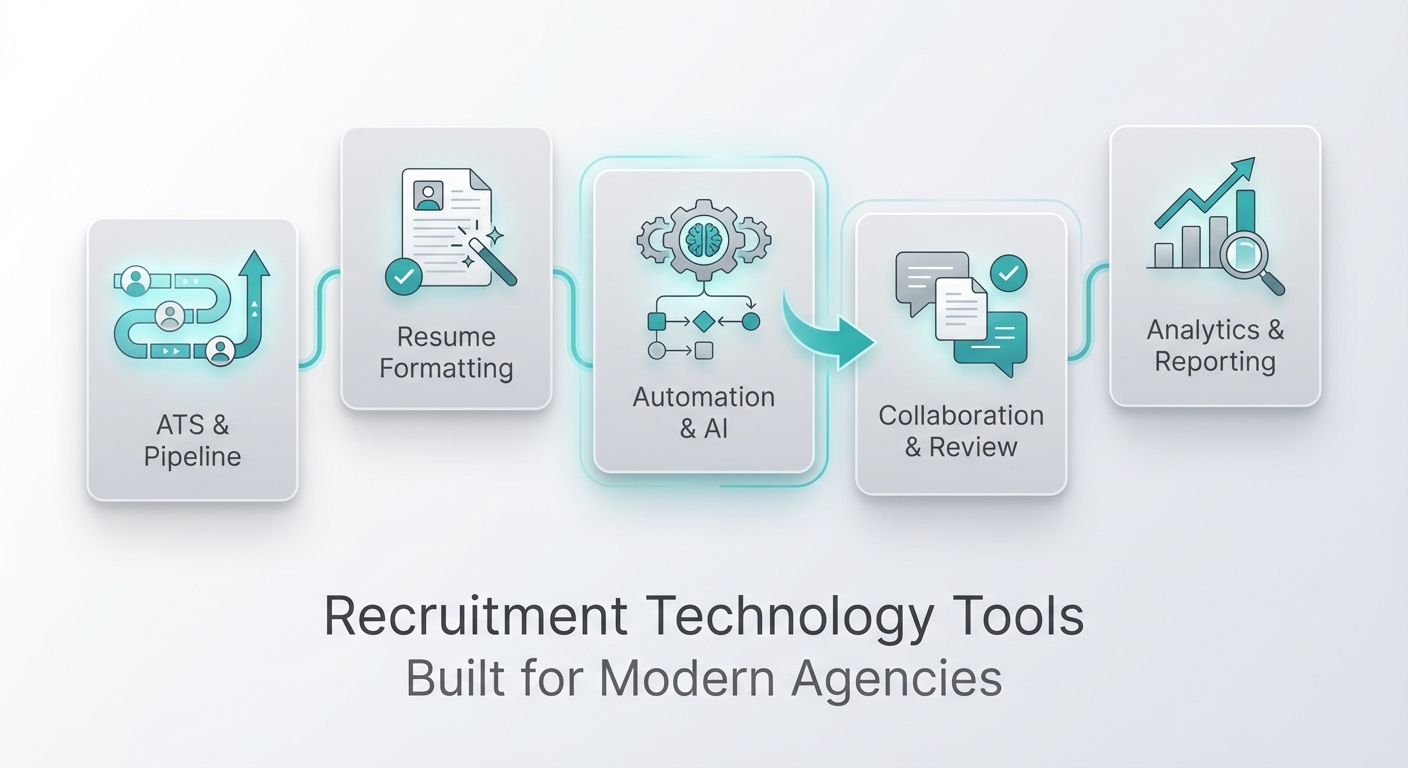
A practical guide to recruitment technology tools in 2026—what modern agencies use to move faster, standardize workflows, and scale without adding admin overhead.
Recruitment has always been a people business.
Relationships, judgment, and timing still determine outcomes. But as we move into 2026, the agencies that consistently outperform the market share one thing in common:
They operate on strong systems.
Recruitment technology tools are no longer optional add-ons. They shape how recruiters source candidates, prepare submissions, collaborate internally, and deliver consistent results to clients.
In this article, we’ll break down what recruitment technology tools really mean today, why agencies invest in them, and how the right tools remove friction from everyday recruiting workflows.
Why Recruitment Technology Tools Matter More Than Ever
Recruitment teams are under more pressure than ever.
Clients expect faster submissions.
Candidates expect smoother communication.
Recruiters are expected to manage more roles, more data, and more stakeholders—without compromising quality.

Yet many workflows still rely on manual steps that quietly drain time:
- repetitive document formatting
- duplicated admin work
- inconsistent outputs across recruiters
Recruitment technology tools exist to absorb this operational load so recruiters can focus on what actually drives placements.
The Evolution of Recruitment Technology Tools
Historically, recruitment technology revolved around a single system: the ATS.
While ATS platforms remain central, modern recruitment workflows now rely on specialised tools that handle specific tasks more effectively.
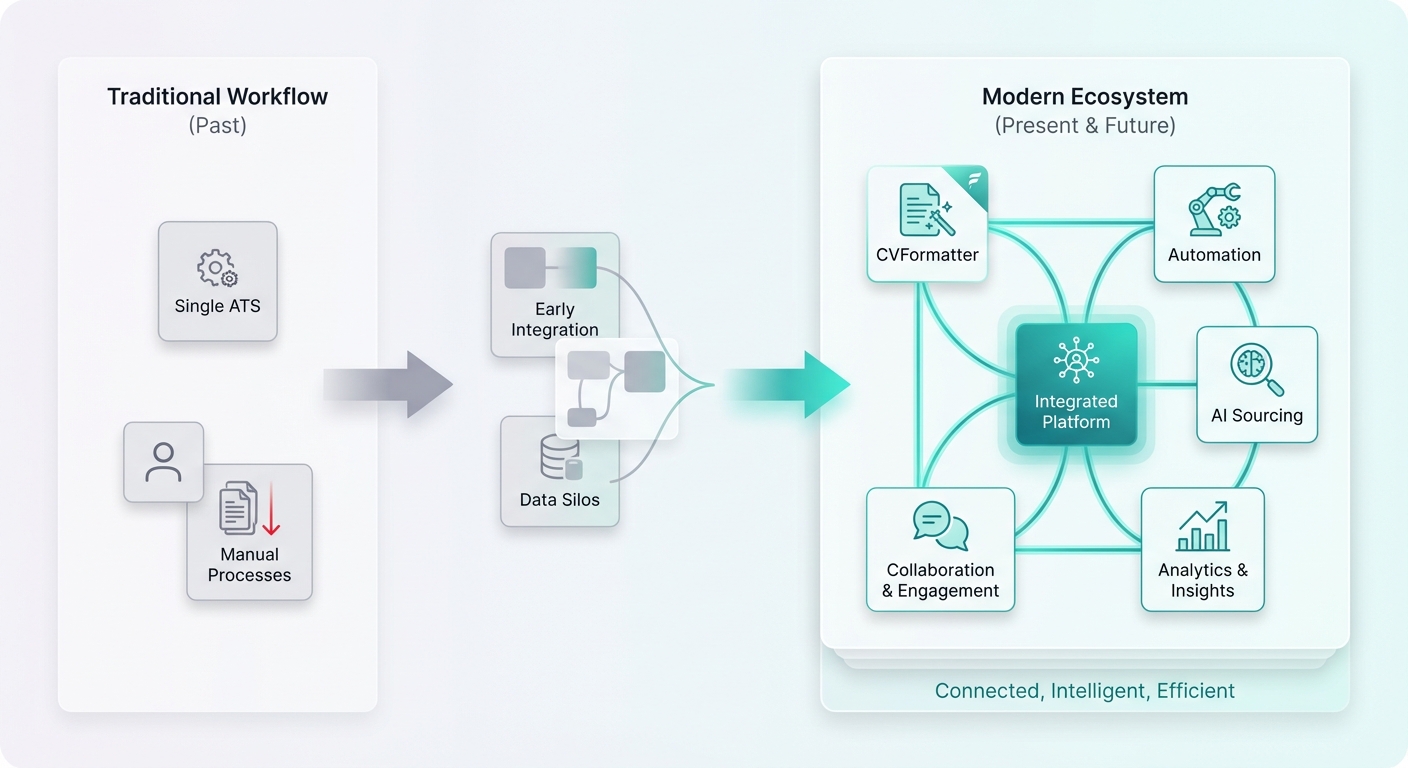
Instead of one system doing everything poorly, high-performing agencies now use connected tools that work together:
- sourcing and intelligence tools
- workflow automation
- resume and CV processing
- collaboration and productivity tools
The goal is not more tools—it’s fewer manual steps.
Core Categories of Recruitment Technology Tools in 2026
Applicant Tracking Systems (ATS)
ATS platforms remain the system of record for candidate data, pipelines, and placements.
However, ATS platforms are not designed to handle every operational task. Modern agencies increasingly pair their ATS with purpose-built tools that remove friction from areas like document preparation and workflow automation.
Sourcing and Talent Intelligence Tools
Sourcing tools help recruiters find candidates faster by aggregating data from multiple platforms and surfacing relevant profiles.
These tools excel at the top of the funnel—but once a candidate is identified, the operational workload begins.
This is where many teams still lose time.
Resume and CV Processing Tools
Resume preparation remains one of the most underestimated bottlenecks in recruitment.
Recruiters spend significant time:
- cleaning layouts
- standardising formats
- rewriting summaries
- applying agency branding
At scale, this work becomes a major productivity drain.
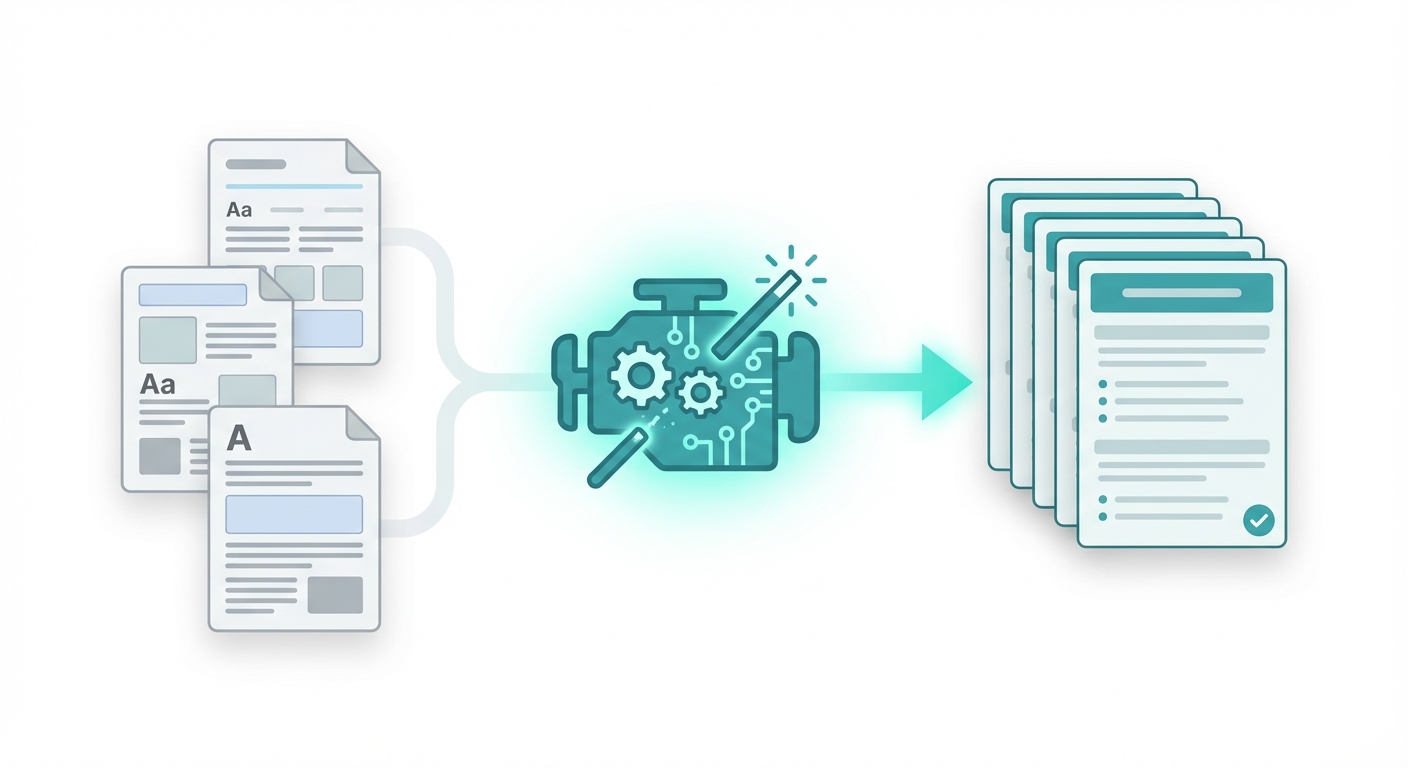
This is where tools like CVFormatter play a critical role.
CVFormatter is built specifically for recruitment teams, allowing agencies to convert raw resumes or LinkedIn profiles into firm-branded, client-ready CVs in seconds—without manual formatting.
Instead of downloading files, editing Word templates, and re-uploading documents, recruiters format once and reuse consistently.
If you're evaluating CV formatting tools specifically, we've put together a detailed comparison of how CVFormatter stacks up against the most common alternatives — covering pricing, features, ATS integrations, and the scenarios where each tool makes sense. See the full comparison here.
Book a free demo here.
Workflow Automation and Integration Tools
Recruitment workflows often span multiple systems.
Automation tools connect these systems, reduce duplicate data entry, and ensure information flows smoothly between platforms.
When tools integrate properly, recruiters stop acting as the “glue” between systems—and workflows become far more efficient.
Collaboration and Team Productivity Tools
Recruitment is a team sport.
Account managers, recruiters, operations teams, and leadership all interact with the same candidate data. Without shared standards, teams quickly run into:
- duplicated work
- version confusion
- inconsistent client submissions
Collaboration tools help enforce consistency while keeping teams aligned.
Why Agencies Struggle Despite Having “Good” Tools
Many agencies already use multiple recruitment technology tools, yet still feel stretched.
This usually happens because:
- tools are built for jobseekers, not recruiters
- workflows aren’t standardised across teams
- systems don’t integrate cleanly
Recruitment technology only delivers value when it removes cognitive load rather than adding complexity.
How Recruitment Technology Tools Improve Client Outcomes
Clients may never see the internal systems recruiters use—but they feel the results.
Agencies using modern recruitment technology tools consistently deliver:
- faster time-to-submit
- cleaner, easier-to-read CVs
- more consistent candidate presentation
- fewer revisions and errors
A polished, standardised CV reflects professionalism just as much as a strong interview process.
The Role of AI in Recruitment Technology Tools
AI is now embedded across many recruitment tools, but its value depends on how it’s applied.
The most effective tools use AI to assist recruiters, not replace judgment:
- AI-assisted CV summaries
- proofreading and clarity improvements
- translation without breaking formatting
- content standardisation at scale
CVFormatter, for example, supports AI summaries and proofreading while keeping recruiters fully in control of final outputs.
This human-in-the-loop approach aligns with how agencies actually work.
Measuring ROI From Recruitment Technology Tools
The ROI of recruitment technology tools is often immediate.
Time savings alone justify adoption. When recruiters save even 10–15 minutes per candidate, those minutes compound rapidly across teams.
Agencies also see ROI through:
- higher submission capacity
- reduced admin fatigue
- improved consistency across recruiters
- easier scaling without adding headcount
Technology becomes a force multiplier—not a cost centre.
How to Choose the Right Recruitment Technology Tools
When evaluating tools, agencies should ask:
- Does this tool fit naturally into existing workflows?
- Is it built for recruitment teams rather than individuals?
- Does it support standardisation without reducing flexibility?
- Will it scale as the agency grows?
Tools that look impressive in demos but create friction in daily use rarely deliver long-term value.
Final Thoughts
In 2026, recruitment technology tools are no longer optional.
Agencies that treat technology as an operational afterthought struggle to keep pace. Those that invest strategically build workflows that are faster, cleaner, and easier to scale.
The goal is not to automate recruitment—it’s to remove unnecessary work.
When chosen thoughtfully, recruitment technology tools become a quiet but powerful competitive advantage—one that clients and candidates feel, even if they never see the systems behind it.